Fan Systems
DC Motor Design Fans: What Changes Inside the Fan System
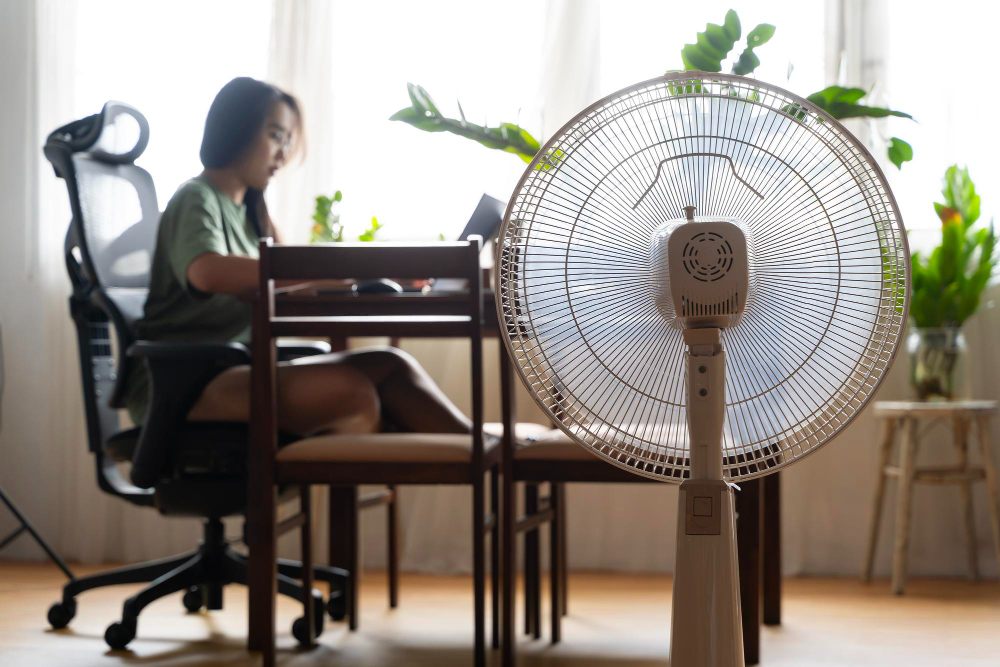
The motor is the working core of a fan. It decides how smoothly the blades start, how stable the speed remains, how much electrical power is used, and how much noise or heat is produced during long operation. Many modern design fans use DC motor technology because it allows finer speed control and efficient low-speed operation. For Malaysian rooms where fans may run many hours a day, this difference can matter more than the product label suggests.
A conventional AC fan motor is supplied by alternating current and controlled by changing voltage or winding configuration. It is familiar, robust, and widely used. A DC motor fan usually receives AC supply from the house wiring, but the fan's internal electronics convert and control that power before feeding the motor. This allows the controller to manage speed more precisely. The user only sees a remote control and speed levels, but inside the fan there is a power conversion and control process.
The Control Chain
The workflow begins when the user selects a speed. The receiver or control board interprets the command and sends the correct output to the motor driver. The motor driver adjusts current to the motor so the rotor turns at the target speed. Some systems use feedback to keep speed stable when blade load changes slightly because of air resistance, dust buildup, or supply variation. This is different from a basic fan that depends more directly on the electrical supply and simple regulator steps.
This control chain is why DC motor fans often provide more speed levels. Lower speed steps can be useful in bedrooms, nurseries, reading corners, and rooms where direct airflow can become uncomfortable. Instead of jumping from too weak to too strong, the fan can operate in a narrow comfort band. The main design fan Malaysia article explains how this motor choice fits into the full room selection process.
Technical Points to Compare
- Low-speed stability: Important for sleep and long sitting periods.
- Starting behavior: A good controller starts smoothly without sudden blade movement.
- Heat generation: Lower losses can reduce motor heat during long operation.
- Remote dependency: Many DC fans rely heavily on remote or electronic controls.
- Serviceability: Electronic boards may be more specialized than basic regulators.
Noise and Comfort
Noise is not only motor sound. It can come from air turbulence, blade imbalance, loose brackets, ceiling vibration, or a clicking receiver module. However, motor design affects the baseline sound level. A well-designed DC motor fan often feels quieter at low and medium speeds because the motor control is smoother. This matters in bedrooms and study areas where a fan may run overnight.
Air noise still increases with speed. If a small fan must spin fast to cover a large room, it may be noisier than a larger fan operating slower. That is why motor selection should not be isolated from blade span and room size. A quiet motor cannot fix poor sizing.
Energy Use in Daily Operation
DC motor fans can use less power than comparable AC fans, especially at low and medium speed. The difference is most meaningful when the fan runs for long hours. In a room used briefly, purchase price and design fit may matter more than electricity savings. In a bedroom, living area, or shop space with daily operation, efficiency becomes a practical operating factor.
The fan can also support air conditioner use. Moving air improves perceived comfort, allowing some users to set a slightly higher cooling temperature. That does not make the fan a replacement for air conditioning, but it can be part of a more efficient comfort strategy.
When DC Motor Fans Make Sense
DC motor design fans are suitable when quiet operation, multiple speed levels, remote control, timer functions, and long operating hours are important. They are also useful where the fan must look refined but still perform comfortably. Buyers should still check warranty, spare remote availability, controller reliability, blade balance, and installer familiarity.
The careful decision is not "DC is always better." It is whether the room benefits from the specific control features. For a technical selection path that includes room size, blade span, finish, and maintenance, return to the main design fan Malaysia guide.
Practical Commissioning Notes
After installation, a DC motor fan should be tested through every speed level rather than only switched on briefly. Low speed confirms smooth control, medium speed confirms comfort, and high speed exposes vibration or blade balance issues. If the fan includes reverse mode, timer settings, or light control, those functions should be tested before the installer leaves. This is especially important because electronic-controlled fans depend on the correct receiver, remote pairing, and wiring arrangement.
Users should also keep the product manual and remote-control information. If the remote is lost or damaged later, model-specific pairing and receiver compatibility can matter. A fan that is technically good can become inconvenient if replacement control parts are difficult to identify.
Technical FAQ
Does a DC motor fan use DC wiring in the house?
No. Most units connect to normal AC supply. The fan's internal electronics convert and control the power for the motor.
Why do many DC fans use remotes?
The electronic controller manages speed and functions, so a remote is a convenient interface. Some models may also support wall controls, but compatibility should be checked.
Can DC motor fans run with standard regulators?
Usually no. Many DC fans require their supplied controller and should not be connected to a normal fan regulator unless the manufacturer allows it.
What is the main maintenance concern?
Keep blades balanced and clean, protect the control module from moisture, and replace damaged remotes or receivers with compatible parts.