Windows and Doors
Louvre Window Ventilation in Malaysia: Airflow, Rain and Room Planning
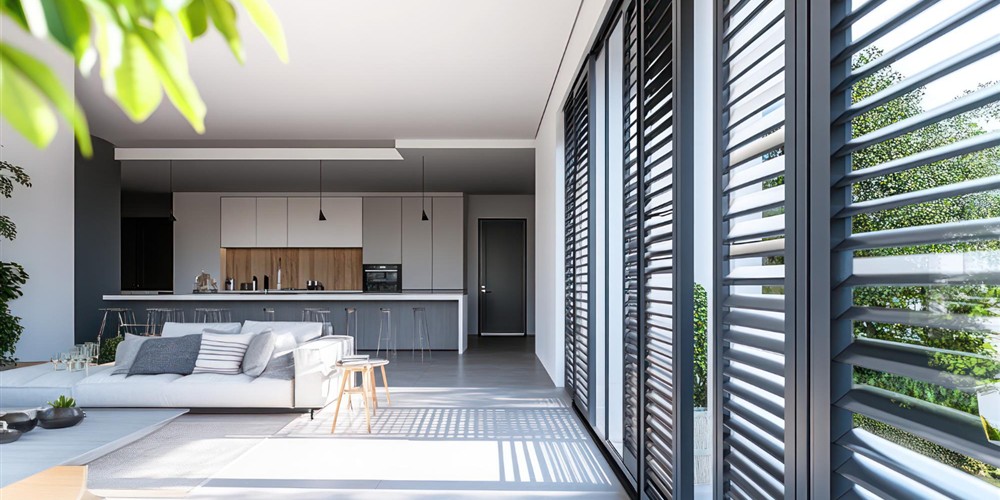
Louvre windows can provide controllable natural ventilation, but blade movement is only one part of the airflow path. Air enters where pressure is higher, travels through the occupied space and leaves through another opening or mechanical extract point. A large louvre facing a closed room cannot deliver continuous cross-flow simply because its blades are fully open.
For a product-level overview, start with the aluminium louvre window specification guide. The planning method here focuses on Malaysian heat, humidity and wind-driven rain.
Establish the ventilation purpose
Define whether the opening is intended for background air change, rapid heat release, moisture removal or occupant comfort. Bathrooms and laundries need moisture control; kitchens may require extract near the source; stairwells can use high-level openings to release rising warm air. Bedrooms need secure, quiet and controllable night ventilation.
Natural ventilation is variable because wind direction and temperature difference change. Where indoor air quality or humidity must be guaranteed, a fan or conditioned system may still be required. Louvres can support that strategy, but should not be credited with a fixed airflow unless the pressure conditions are known.
Trace inlet, transfer and outlet
Mark the likely air inlet and outlet on plan. Openings on opposite or adjacent facades can produce cross-ventilation. A high outlet above a lower inlet can use stack effect, especially through stairwells or double-height spaces. Internal doors, transfer grilles and furniture can either preserve or interrupt the route.
Short-circuiting occurs when inlet and outlet are too close, allowing fresh air to leave before sweeping the room. Deep spaces may need distributed openings. Use smoke pencils or lightweight streamers during commissioning only under safe conditions to observe direction; one observation represents that day's weather, not every operating state.
Airflow variables
- Pressure difference: Created by wind and indoor-outdoor temperature difference.
- Effective free area: Reduced by frames, blade projection, clips and screens.
- Flow resistance: Increases as blades close or mesh becomes dirty.
- Path continuity: Depends on doors, corridors, grilles and the second opening.
- Exposure: Facade orientation and surrounding buildings alter wind and rain impact.
- User behaviour: Security, noise, insects and air conditioning influence whether occupants keep the louvres open.
Do not confuse opening size with free area
The structural opening includes aluminium profiles and closed portions. Even with blades near horizontal, their projected thickness and end clips occupy area. Insect or security mesh further reduces airflow. Manufacturers may publish free-area data for a tested size; apply it only to the same configuration.
At partial opening, the air passage narrows and changes direction. This can be useful for directing air upward or limiting direct view, but pressure loss rises. A practical design provides enough total area that useful ventilation remains available without requiring the most exposed position during light rain.
Manage tropical rain
Blade slope can deflect ordinary rainfall, yet strong wind can carry droplets upward or horizontally. Facades facing prevailing storms need deeper shelter, suitable seals and reliable drainage. Eaves, recesses or external hoods can reduce direct exposure if they do not obstruct airflow.
During severe weather, users may need to close the blades. Closed-state water performance then depends on overlap, contact seals, frame channels, sill fall and perimeter installation. Keep weep paths clear. A bathroom window protected by a corridor does not face the same risk as a high external wall.
Balance airflow with privacy and security
Opaque aluminium blades block direct views more effectively than clear glass, although gaps remain when open. Frosted or patterned glazing diffuses sight while retaining daylight. Blade angle can screen downward or upward views, but it may also reduce free area and redirect rain.
Ground-floor and accessible openings may need a security screen or other barrier. Confirm that the complete arrangement still provides intended ventilation and emergency requirements. Fine insect mesh is useful in Malaysian conditions, but grease, dust and fibres can load the mesh quickly near kitchens, roads or laundry areas.
Room applications
For bathrooms, position the opening where moist air can leave without sending rain onto wet-sensitive finishes. Pair it with mechanical extract when enclosure, occupancy or regulations demand predictable removal. In kitchens, natural ventilation can handle background heat but should not replace a properly designed cooking exhaust.
Stairwells benefit from high-level exhaust paired with a low-level air path. Living rooms often prioritise daylight and view, favouring glass blades or mixed window types. Service yards and laundries value privacy, continuous air movement and easy cleaning. The blade selection guide links these room duties to material choice.
Commissioning in real use
Operate all blade banks, confirm unobstructed travel and check that occupants can reach controls. Observe whether internal doors need to remain open for airflow and whether that is realistic. Test screens for rattling and inspect drainage after rain. If the room remains humid, measure conditions and investigate the whole air path rather than simply enlarging one opening.
Document recommended operating positions for normal weather, rain and air-conditioned periods. Leaving louvres open while cooling can add latent load because humid outdoor air must be dehumidified. A clear operating strategy prevents ventilation and cooling systems from working against each other.
Technical FAQ
Do louvre windows create airflow without another opening?
They can allow some exchange, but sustained cross-flow normally needs a connected inlet and outlet driven by wind or temperature difference.
Why does insect mesh reduce ventilation?
The strands occupy area and create friction. Finer or dirty mesh produces more resistance, so calculations should consider the full screened assembly.
Can louvres stay open during heavy rain?
That depends on facade exposure, blade angle, shelter and system design. Wind-driven rain can penetrate an open louvre, so a closeable and drained arrangement is important.
Should louvres be open while air conditioning runs?
Usually not for routine cooling because warm humid air increases sensible and latent load. Use a deliberate ventilation schedule or a designed fresh-air system.